


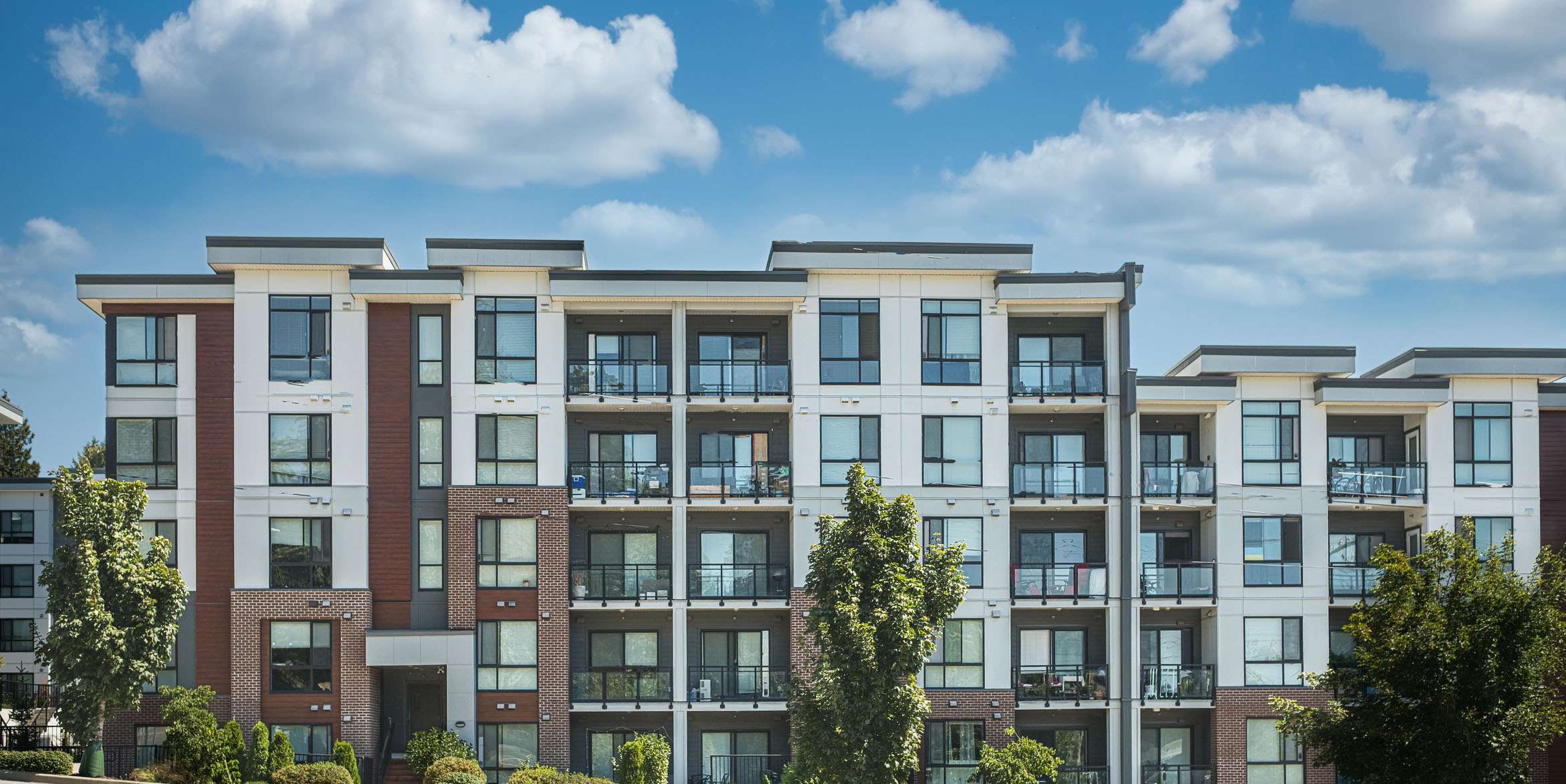
If your idea of summer fun is lounging beside a pool or on a private balcony with a cool bevvie and no grass to cut, condo living may just be for you.
Condos offer many benefits. They’re often more affordable than a single-family house, and someone else handles much of the maintenance and repairs, such as mowing the grass, shovelling snow and replacing the roof. Many condos may also have enhanced security and concierge features. They can even offer a wide range of social, entertainment and recreational facilities and activities.
However, purchasers should be aware — before they buy — of the many issues and considerations surrounding the purchase of, and the lifestyle in, a condo. Condo ownership is very different from owning a house under traditional fee simple tenure. Following are the top four basic concepts you should know about condo ownership.
Types of condos
A “condominium” or “condo” refers to a form of legal ownership, as opposed to a style of construction. Condos are often thought of as units in high-rise buildings, but they can also be: Low-rise buildings (fewer than four storeys); townhouse or rowhouse; duplexes or a side-by-side; triplexes; single-detached houses; and vacant land on which owners may build.
There are even mixed-use condos that are partly residential and partly commercial buildings. Condos come in various sizes with diverse features and can be found in almost every price range.
Condo buyers have three choices. They can buy a new condo, a resale condo or a conversion condo.
1. New condos refer to units that have not been previously occupied. They can be in the planning stage, under construction or recently completed and are usually purchased from a developer. They often give purchasers the chance to customize their units.
2. Resale condos are units that have already been occupied, typically in older buildings, and are for sale by the current owner. One of the advantages of purchasing an existing condo is that you get to see the unit, building and grounds before you purchase.
3. Conversion condos refer to units in a building that was previously used for something else but has been, or will be, renovated for residential use. For example, many loft-style condos are converted from former commercial or industrial buildings. Conversions can also refer to switching from rental to condo units.
A unique form of ownership
Owning a condo differs from owning a conventional home in several ways.
1. What you own When you buy a condo, you own a private dwelling called a “unit.” Your unit is registered in your name but you share ownership of the common elements and assets of the building and community.
It’s important to be clear where your unit’s boundaries are located before you purchase. You can find information about your unit’s boundaries in your condo’s governing documents.
Some condo units (called freehold condos) include ownership of the land your home is on. If this is the case, your unit may be the entire house including the exterior walls, the roof and the lawn. You may want to carefully review the condo corporation’s site plan so you know exactly where your unit’s boundaries lie.
Common elements may include lobbies, hallways, elevators, recreational facilities, walkways, gardens and other amenities. They may also include structural elements and mechanical and electrical services. Some common elements may be outside the unit boundaries, but are for the sole use of the owner of a particular unit. Balconies, parking spaces, storage lockers, driveways and lawns are common examples.
2. What you pay In addition to paying for your unit and a share of the common property, you also pay monthly condo fees, along with all of the other unit owners. This covers the upkeep and replacement of common elements — whether you use them or not. The fees may also cover the corporation’s insurance policies, utilities and services like snow removal.
Part of those monthly fees may be put into a reserve fund — which is managed by the board of directors — to cover the estimated cost of future maintenance and repairs of common property. Required by law in Manitoba, a reserve fund study is often used to tell condo owners how much money should be paid into the reserve fund. The law also dictates specific financial and structural requirements for these funds. Conducted by an engineer or other professional, the reserve fund study involves a detailed examination of all components, an analysis of when repair and replacement are expected, and an estimate of these costs.
Condo fees may have to be adjusted from time to time to reflect the changing costs of goods and services and the state of the building’s reserve fund. Look for these adjustments in the next year’s budget. Surpluses are typically either applied to future common expenses or paid into the reserve fund.
If an owner sells a unit before the end of the condo corporation’s fiscal year, the owner cannot obtain a refund for any prepaid common expenses but should provide for adjustments in the purchase or sale agreement. Your REALTOR® will be able to help guide you through these types of negotiations.
Even though condo owners often pay the same municipal taxes as other homeowners, they don’t always receive services covered by those taxes, such as garbage pickup, road repairs and snow removal. This is because condos may be considered (by the municipality) to be private communities, some with limited access. Before you buy, ask what municipal services the condo corporation receives and what other services are carried out by independent contractors — and reflected in your condo fees.
More about condo living
Three of the most common causes of annoyance to condo owners are pets, people and parking — the “three Ps.” That’s why condos have rules and restrictions around them and other issues, such as noise and the number of people who may live in a unit. It’s essential that you review the condo’s rules, bylaws and declaration before you make an offer.
Before buying, find out what common property elements are for your use only and what restrictions apply. For instance, restrictions may prevent you from parking a boat or commercial vehicle in your parking spot, or dictate what you can place on your balcony.
Your role in the community
When you become a condo owner, you become a member of a condo corporation and have certain rights and responsibilities. One of your key rights is the right to vote at general meetings on matters that affect the condo. You are also eligible to help elect the board of directors which takes responsibility for the management of the corporation’s business affairs. The board is generally made up of individual condo owners.
As an owner, it’s your responsibility to participate in the governing of the condo. You can do this by attending general meetings and information sessions, serving on the board of directors or on a committee, and voting. It’s also important to read the minutes of meetings and other information sent to members, such as the condo newsletter, as well as the corporation’s budget and financial statements.
Condo owners are part of a community with shared responsibilities. What you get out of that community and how involved you become in its daily operations is up to you. Many condo owners form lasting friendships with the members of their condo complex and create a vibrant social network within it.
Does condo living sound like it’s the right choice for you? By working with an experienced REALTOR® you’ll be able to make the decision to purchase a condo with confidence.
— www.cmhc-schl.gc.ca