


With Groundhog Day right around the corner (February 2), it’s a good time to consider just how long winter will actually last. While we were fortunate to experience some mild winter weather at the beginning of the season, this latest cold snap has reminded us just what winter is all about here in Manitoba.
Thermostats are an essential part of any home, but before you crank the heat up, remember that there’s a right way and a wrong way to program them.
Programming a thermostat can seem daunting. That observation was not made by a frustrated homeowner but by John Galeotafiore, who oversees testing of thermostats and other home products for Consumer Reports. The challenge can result in programming mistakes or even avoidance of programming altogether.
But programming really isn’t that hard, and it’s definitely worth doing because it can save at least 10% a year on heating and cooling costs.
You can easily achieve that 10% by turning your thermostat back several degrees from it’s normal setting for eight hours a day — for example, while you’re sleeping or at work.
The first step is to pick the thermostat that best suits your scheduling needs so you can “set it and forget it,” an approach that helps you achieve the most savings.
Pick the right thermostat
There are four types of programmable thermostats, each with a distinctive scheduling style:
• 7-day programming. Best for individuals or families with erratic schedules, since this is the most flexible option. It lets you program a different heating/cooling schedule for each day of the week.
• 5-1-1 programming. One heating/cooling schedule for the week, plus you can schedule a different heating/cooling plan for Saturday and Sunday.
• 5-2 programming. Same as 5-1-1 programming, except Saturday and Sunday will have the same heating/cooling plan.
• 1-week programming. You can set only one heating/cooling plan that will be repeated daily for the entire week.
You’ll need a program for both the cooler months and the warmer months.
TIP: Before buying a programmable thermostat, identify the type of equipment used to heat and cool your home so you can check for compatibility. For example, do you have central heating and cooling, or just a furnace or baseboard heating? Otherwise, you may not reap the rewards of energy savings and may risk harming your heating and cooling equipment.
Change the factory settings
Most programmable thermostats have a preprogrammed setting that’s supposed to be for the typical family. But what family is typical these days? You need to adjust the thermostat’s settings so it syncs up with the life you and your family lead instead of some pretend family.
Programmable thermostats typically use either daily or weekday/weekend schedules, and almost all smart thermostats offer daily schedules. Once you know what kind of schedule your thermostat uses, jot down the times your family generally wakes up, leaves home, returns home, and goes to bed each day of the week so that you can use it when you program your thermostat.
The following settings are a good energy-saving rule of thumb.
Winter months:
• For the hours you’re home and awake, program the temp to between 20 and 22 C. If your house isn’t energy-efficient, you may need to turn it a degree or two higher to feel comfortable.
• Lower to between 15 and 18 C for the hours you’re asleep or out of the house.
Summer months:
• For the hours you’re home, program air conditioning to 25 C. Lower this to about 18 C at night.
• For the days you don’t need cooling, manually shut off the AC. Keep in mind, it will kick back on if the house gets too warm.
• Program it to be warmer than usual when you’re out of the house, to about 31 C.
Here are a few programming timing tips to help you create the best set-it-and-forget-it heating and cooling schedule for your home:
• Shut down heat or air conditioning 20 to 30 minutes before you leave home each day.
• Turn on heat or air conditioning 20 to 30 minutes before you come home each day.
• Reduce the heating or cooling 60 minutes before you go to sleep each night.
• Increase heating or cooling about 30 minutes before you wake up each morning.
• Spend time tweaking your program for a few days to make sure it feels right.
If you have pets that will be left alone in the home all day, adjust your settings accordingly to make sure they stay comfortable while you’re gone.
TIP: With a WiFi-enabled thermostat, you can control your home’s temperature while on the go. That way, you’re not wasting energy if you’re running late or forgot to create a new program before going on vacation.
FYI: A furnace does not have to work harder to warm a house after the temperature has been set low during the day.
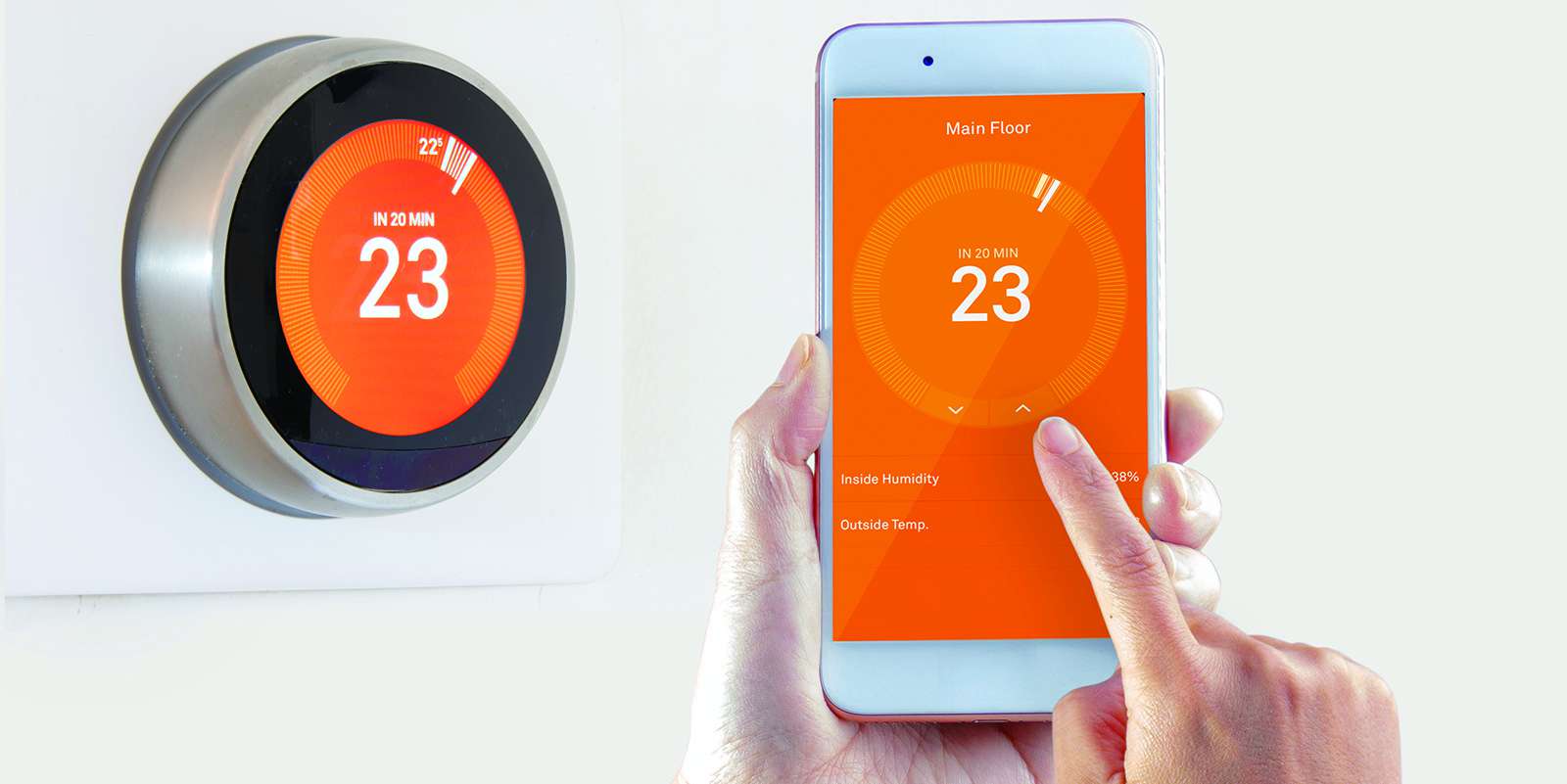
Use a Wi-Fi thermostat to make it super easy
Want something that’s simpler? Newer more high-tech models have simplified the process:
• The Nest Learning Thermostat It learns what temperature you like and builds a schedule around yours. Independent studies showed it saved people an average of 10% to 12% on heating bills and 15% on cooling bills. Since it’s Wi-Fi, it can be controlled remotely.
• Honeywell Wi-Fi Smart Thermostat With seven-day programming, the Wi-Fi Smart Color Thermostat allows you to create a custom temperature schedule for every day of the week. When schedules change, you can temporarily update the settings and easily restore your usual program.
FYI: If your thermostat was made before 2005, it likely contains mercury. After that date, digital thermostats entered the market and eventually took over the thermostat market. That said, some contemporary companies still make mercury thermostats. To see if your programmable thermostat contains mercury, check with the manufacturer.
If you decide to dispose of a thermostat that contains mercury, find a thermostat recycling site near you. In Manitoba, you can recycle old thermostats, especially mercury-containing ones, for free through the Thermostat Recovery Program (TRP) run by HRAI. Visit www.hrai.ca to find a local collection point near you, ensuring they never go in regular garbage due to the mercury hazard. (Not sure why mercury is so bad? Here’s the skinny: It’s toxic and it never breaks down. When it enters the waste stream, it permanently damages the ecosystem.)
Thermostats aren’t the only way to make your home more energy efficient. Visit www.efficiencymb.ca to find more information on ways to improve your home’s heating and cooling efficiency, along with the many rebates that they offer.
Stay warm out there!
— Houselogic.com