


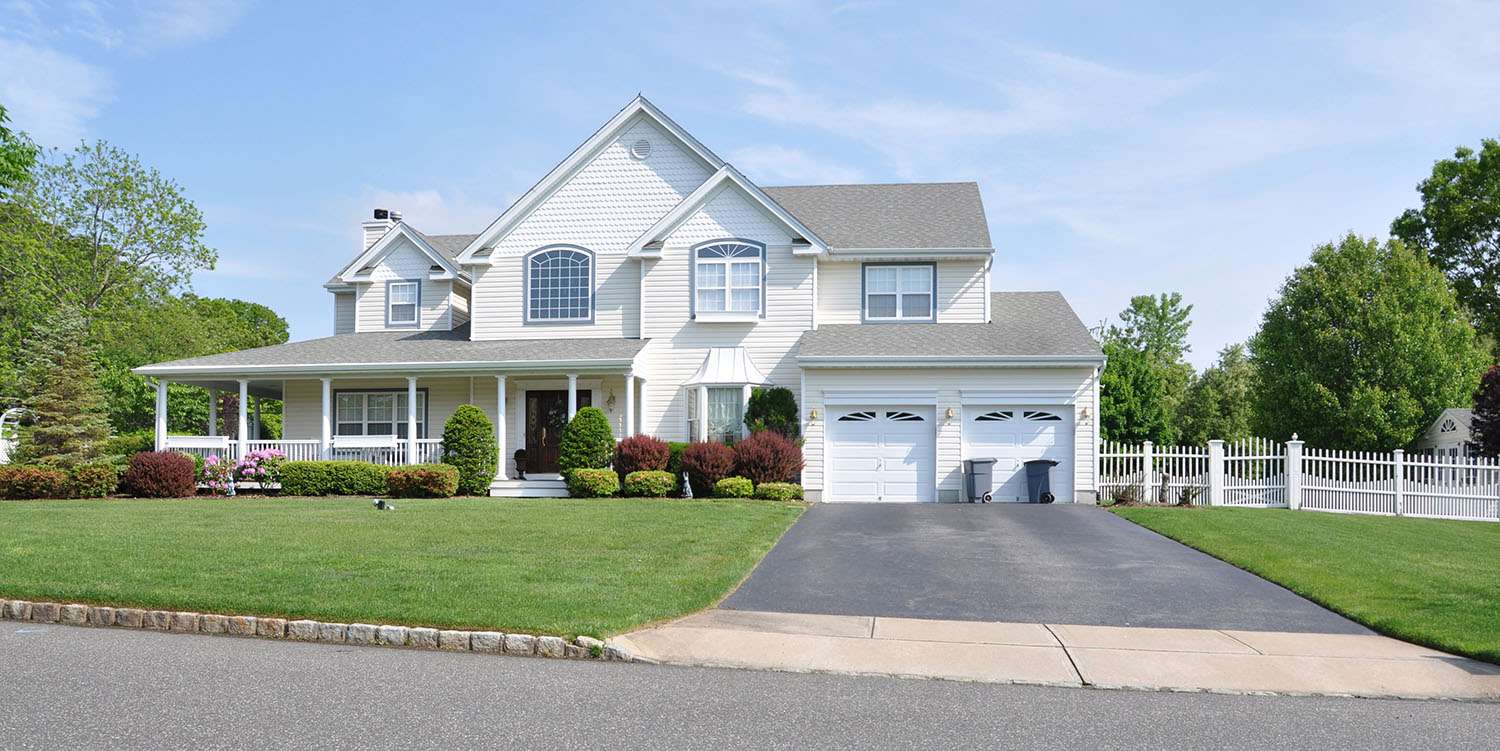
The first day of summer is just around the corner (June 21 — the same day as Father’s Day!) and you may be thinking of ways to improve your home’s overall appearance — or curb appeal.
Curb appeal goes deeper than simply making your house the prettiest on the block. Improving your home’s curb appeal also increases your home’s value, making your property easier to market whenever you decide to sell, so it’s always a good investment.
However, the challenge is not to overspend on improvements that won’t improve your ROI (return on investment). Since spending too little on cheap supplies could cost you more in redos one or two seasons from now, the trick is to choose durable materials that’ll save you money over the long term while making your house fabulous as well as functional without breaking the bank. Here are some smart upgrades that can improve curb appeal and deliver lasting value.
New steel or fiberglass front door
Your home’s front door is the first thing visitors or buyers see when they arrive. And because they have to get very close and touch it to enter your home, it’s one of the most important things to keep maintained in tiptop condition.
A new front door doesn’t just look good — it also recoups a large portion of its cost when it’s time to sell. Whether you choose fiberglass or steel doors, both offer benefits like energy-efficiency that standard wooden front doors don’t. Both steel and fiberglass resist weathering and damage, but steel resists prolonged cold temperatures better than fiberglass without warping.
Insulated steel garage door
Wood, fiberglass and steel are the three most common garage door materials. While traditional wood does have an undeniable classic appeal, insulated steel or fiberglass doors offer the most bang for your buck — and require less maintenance like repainting. Plus, a new garage door will recoup its cost when you sell.
Whether you choose steel or fiberglass, make sure it’s insulated, especially if your garage is attached to your house. Garage door insulation is sandwiched between two outer layers, helping with durability, as well as saving on energy costs. Keep in mind that fiberglass is the more expensive choice of the two.
Concrete or brick edging
Edging transforms your garden from a blob of mulch to an well-defined and functional space. Edging does more than look great: When you have a line to follow, mowing and trimming become much easier. Edging also does a phenomenal job of containing the mulch, rock or soil in your garden beds and preventing it from spilling onto your lawn. It also does the same with invasive ground cover plantings.
Use concrete or brick edging, which survive the elements better than plastic and offers a more permanent, intentional look than cheaper options that can warp and pop out of the ground in winter.
Non-porous rocks
A gorgeous rock bed is a great way to introduce low-maintenance beauty to your home. But don’t throw just any rocks on the ground. It’s recommended to avoid limestone, which breaks down quickly and will soon become hard rubble. Instead, choose a non-porous stone like decomposed granite, or trap rock, which gives you that classic stone look and costs about the same. If the gravel look is what you’re going for, pea gravel is a great, permeable option.
Concrete pavers
Ideally, the architectural style of your home should drive the selection of hardscape materials like pavers. Irregular flagstone looks charming for a traditional home but would be out of place as an approach to a modern design requiring a more linear appearance.
There is a one-size-fits-most solution for pavers, though, no matter the style choice: concrete. Not only can you find enough sizes, colours and designs to mimic almost any style, but the material is durable.
Concrete’s permeability is a selling feature, too, especially during our hot summers. Sprinkler and rainwater pass slowly through the concrete, keeping grass and plants damp for longer. A particularly attractive option is combining concrete edging with rock beds for a polished look. Pop in a few colourful plants and some solar lights, and you’ve got landscaping perfection with minimal effort and maximum satisfaction.
Composite decking
Wood decks look lovely, but keeping them weatherproof requires hard work such as sanding, and regular sealing. Instead, consider composite decking with a good warranty.
There are three types of composite decking:
• Polyethylene-based — it’s the least durable.
• Polypropylene-based — a good mid-grade choice.
• Polyvinyl chloride (PVC)-based — the most durable, but also about 20% more expensive.
Composite decking is definitely more expensive than a wood deck, but requires very little maintenance — no sealing, staining, replacing of rotten boards or risk of insects, giving the deck a longer lifespan and saving you thousands of dollars over the years.
Native plants mixed with annuals
The landscaper-approved route to long-lasting curb appeal is to use native plants in your yard. Since they’re uniquely suited to your zone’s natural rainfall and temperature range, you’ll spend less money running the sprinkler and less time nurturing fussy out-of-their-element trees and bushes. The goal is to avoid watching your investment die because the perennials you chose can’t survive our harsh winters. The correct plants not only keep maintenance costs low, they also don’t need toxic pesticides or fertilizers to thrive.
Annuals like flowers are pretty and add pops of colour that last all summer, but the trick is not to only plant something that lasts for one season.
Acrylic latex exterior paint
When painting the exterior of your home, latex is the smart choice since it’s designed to accommodate any settling of the facade without cracking during the change of seasons. Oil-based paint is a common alternative, but it tends to turn yellow after a few years and takes much longer to dry, requiring nearly a day.
Unlike oil-based paints, latex covers vinyl, aluminum, fiber cement, stucco, brick and metal equally well. Opt for acrylic latex, which cleans up easily with soap and water. To save yourself an extra step, pick one with built-in primer. A second coat of paint may still be required for full, lasting coverage.
A few strategic enhancements can go a long way toward improving your home’s exterior and marketability. And when you do decide to sell, remember to call on the expertise of an experienced REALTOR® to help.