


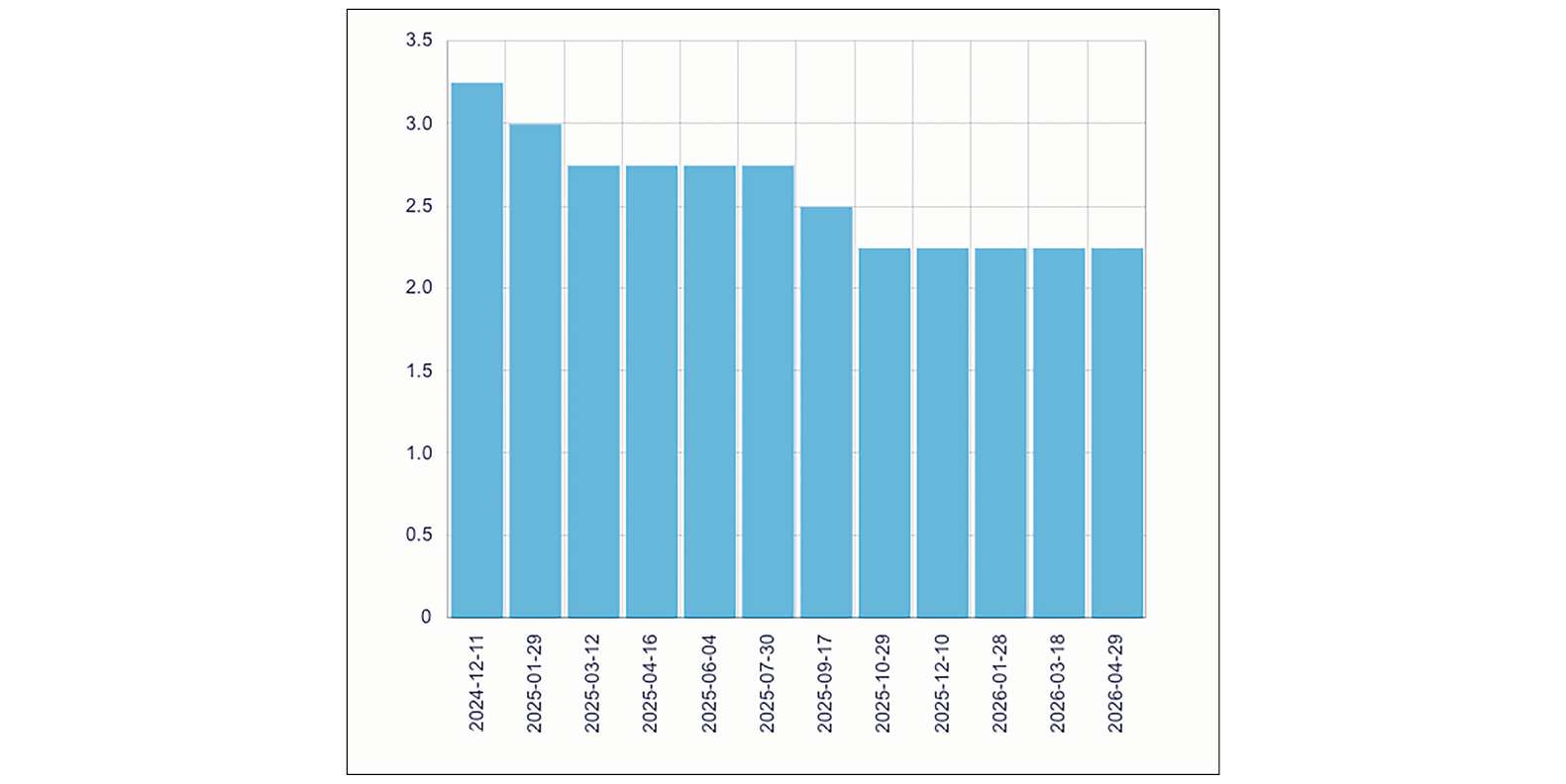
If steady interest rates were what you were looking for, well, you have your wish.
For the fourth straight time, the Bank of Canada will be keeping its policy interest rate at 2.25%, extending a hold that has been in place since October 2025.
The Bank of Canada’s policy rate, otherwise known as the overnight rate, directly influences borrowing costs, including mortgage rates, and can have a significant impact on homeowners, first-time home buyers and repeat buyers.
In their latest announcement, the Bank of Canada cited “heightened volatility” caused by the conflict in the Middle East, as well as unpredictable US trade policies, as the main reasons why the rate was unchanged.
The Bank’s outlook for economic growth in Canada is also little changed from the January projection.
“After a contraction in the fourth quarter of 2025, growth is forecast to have resumed in early 2026. Consumer and government spending are supporting economic activity, while tariffs and trade uncertainty are weighing on exports and business investment,” the Bank’s media release states, adding, “Housing activity declined in the fourth quarter and is being held back by slow population growth, economic uncertainty and ongoing affordability issues.”
According to the Canadian Real Estate Association, the Bank noted that global bond yields had risen since January, which has already led to an increase in mortgage rates, as fixed rate mortgages are based on the bond market.
Of note on the housing market, the Bank focused on affordability challenges and the decline in population growth as weighing on demand, while also pointing to weather-related factors that slowed resale activity in the first quarter of the year. In its Monetary Policy Report, the Bank also called out “a substantial inventory overhang of small condominiums in some major centres.”
As a potential first-time home buyer, how does the Bank of Canada’s interest rate announcement affect me?
As always, the national housing market will greatly differ from what’s happening in your neck of the woods. You’ll first want to talk with a REALTOR® to get a better understanding of whether your region is experiencing a buyers’, sellers’ or balanced market. From there, you’ll want to find out how much home you can afford. Luckily, online mortgage calculators make it super easy to find out what you’re pre-approved for and what type of mortgage — variable or fixed — is right for you.
At the time of this rate announcement, RBC’s three-year fixed rates are as low as 4.44% and five-year fixed is as low as 4.59% on its site. A five-year variable closed rate comes in at 3.95%.
Let’s do a bit of math and use some real-world numbers to help you get a better idea of what this means.
RBC’s Mortgage Payment Calculator can help you determine the impact of a rate change on your unique personal financial situation. For example, using the Canadian Real Estate Association’s posted national average price of a home ($673,084 as of March 2026), if you were to put 20% down using a standard 25-year amortization period, here are the differences in monthly payments:
• Five-year fixed at 4.59% = about $3,007 a month
• Five-year variable at 3.95% = about $2,827 a month
Why would you choose a fixed rate, then? Well, it comes down to predictability. If you want to know exactly how much to budget for your mortgage each month, then a fixed rate may be best for you. A fixed mortgage may also be the way to go if you believe interest rates may rise in the future. On the other hand, if you want to assume risk and take a chance rates will hold or go down soon, then a variable rate may help you save thousands of dollars over the course of your mortgage term.
As a homeowner currently with a variable rate, what does this mean?
For mortgage holders with variable rates, the Bank of Canada rate hold means there’s no immediate change to your payments.
Because variable rates are tied to lenders’ prime rates, which move with the Bank of Canada, today’s decision keeps things steady, at least for now.
If you’re already in a variable mortgage:
• your monthly payment stays the same (unless you’re on an adjustable payment structure);
• the same percentage of your payment continues to go toward interest versus principal; and
• there’s no short-term relief, but also no new pressure until at least June (the next Bank of Canada rate announcement).
The bigger picture is uncertainty. While rates aren’t rising, the Bank has signaled caution, meaning cuts aren’t guaranteed anytime soon, either. As a variable rate holder, you may be able to switch to a fixed rate mortgage to lock in rates, if you want to protect yourself against any future rate changes and keep your amortization timeline on track.
As a homeowner currently with a fixed rate, what does this mean?
For fixed-rate homeowners, a rate hold changes very little.
Your rate and monthly payment stay locked in for the duration of your term, regardless of Bank of Canada moves. Now, if your mortgage is up for renewal soon, then you’ll definitely want to pay attention to the next section.
As a homeowner with a mortgage up for renewal, what should I do?
The good news is that rates didn’t go higher. The bad news is you may be facing higher mortgage payments soon.
To the one million Canadians who have a mortgage up for renewal in 2026, these rates may seem daunting. They may even be double the rate you have right now.
What can you do to prepare?
Start shopping around for rates at least four to six months before renewal, so you’re ready to lock in a rate you’re comfortable with. You may want to look at extending your amortization to help lower monthly payments, although it does mean adding years before your home will be fully paid off, plus paying more in interest.
Above all else, you’ll want to create a budget and make sure you can afford your new payment amounts. This is where having a REALTOR® and a mortgage specialist on your side comes in really handy.
Whether you’re buying, selling or renewing, the key isn’t trying to predict the next rate move, rather, it’s about making informed decisions based on today’s conditions.
— REALTOR.ca