

The snow is gone, the sun is shining, and what better way to celebrate Mother’s Day than to start planning for a season of gardening enjoyment.
Whether you have a big yard, a small yard, or just a balcony or patio at your condo or apartment, gardening is a great way to spend time outdoors. And by planting bushes and trees or flowers leading up to your front door, or simply setting out window boxes and planters on your balcony or patio, you’ll add instant curb appeal to your home.
Depending on our spring weather, you could start planting some perennials early, but it’s usually a rule of thumb to not put anything into the ground until the May long weekend. By then, the sun is reliably warm and the ground frost has definitely thawed out. Ready to get a jump on your spring gardening? Whether you’ve gardened before, or are a beginner, here are seven great tips to help get you started.
Consider sunlight exposure
Sunlight is the lifeblood of any garden, so it’s essential to figure out how much sunshine your outdoor spaces get throughout the day. Make a note of shady spots and sun-drenched patches to tailor your plant selection accordingly. Different plants need different amounts of sunlight.
Understanding the play of sun and shade in your yard may require a little extra work. Consider keeping a journal that tracks sunlight patterns in your yard every two hours. Or draw a rough map of your yard and mark the movement of sun and shadow across the space every two hours throughout the day. Apps are also available to make it a breeze to plan, track, and access key info about your garden.
Plants usually require one of the following:
• Full sun: Six or more hours of direct sunlight
• Partial sun: Four to six hours of direct sun
• Partial shade: One and a half to four hours of sun
• Full shade: Less than one and a half hours of sun
A gardening expert at your local nursery can help you identify the plants that can thrive best in the different parts of your yard.
Make a plan
Now comes the fun part — deciding what kind of garden speaks to your green soul. Whether you’re dreaming of a bountiful vegetable patch, a fragrant herb garden, or a plot of colourful blooms, there’s a garden style for every taste and temperament. Here are a few options to consider:
• Herb garden: Most herbs grow well in containers or small gardening beds. Herbs like basil, mint, chives, and parsley are easy to grow. Imagine how much you can save on the cost of buying fresh herbs at the farmer’s market or grocery store.
• Vegetable garden: Bell peppers, cucumber, zucchini, and peas are among the easiest-to-grow vegetables. Harvesting your own fresh produce will help your family eat more veggies and feel incredibly rewarding.
• Native plants: Native gardening not only promotes biodiversity but may also require less water and keep you from overdoing or even eliminating the use of pesticides and fertilizers. A local gardening expert can help you understand which local plants are the best fit.
Test and prepare the soil
Healthy soil is the foundation of a thriving garden, so it’s worth investing some time in testing and correcting your soil. Container gardeners may skip this step, but in-ground gardeners can’t afford to. You can buy a soil testing kit or have a soil test done for you. Collecting soil samples is easy, and most testing services are convenient and affordable. Getting your results may take a few weeks, though (depending on wait times at your testing center). Testing will help you determine your soil’s pH and nutrient levels so you can choose the right plants and fertilize your soil properly.
Typically, the pH range you want is 6.0 to 7.4 so if your soil is within this range, you don’t need to adjust the soil pH. If your test shows your soil pH is over 7.2 or below 5.5, you can take corrective measures.
• To raise soil pH: You can use agricultural lime which is usually available as a powder, granules or pellets. Baking soda also works to increase soil pH though the process is slower.
• To decrease soil pH: Sulfur, iron sulfate or aluminum sulfate can all help reduce soil pH.
Adjusting the soil pH may be too complex a project for beginners, so if you suspect your yard needs a soil pH adjustment, consider getting help from a professional gardener or landscaping expert.
Pick your plants
With your soil prepped and your garden vision in mind, it’s time to choose your plant babies. Your yard’s sun exposure and your preferred type of garden should be at the forefront of your decision-making process but you’ll also need to consider the climate, soil and water requirements.
Identifying the right plants for your garden can be tough at first, but it’s easy to research the best plants for your yard online or talk to experts at your local nursery. Whether you’re starting from seed or picking up seedlings, opt for varieties that are well-suited to your hardiness zone and growing conditions.
Start planting
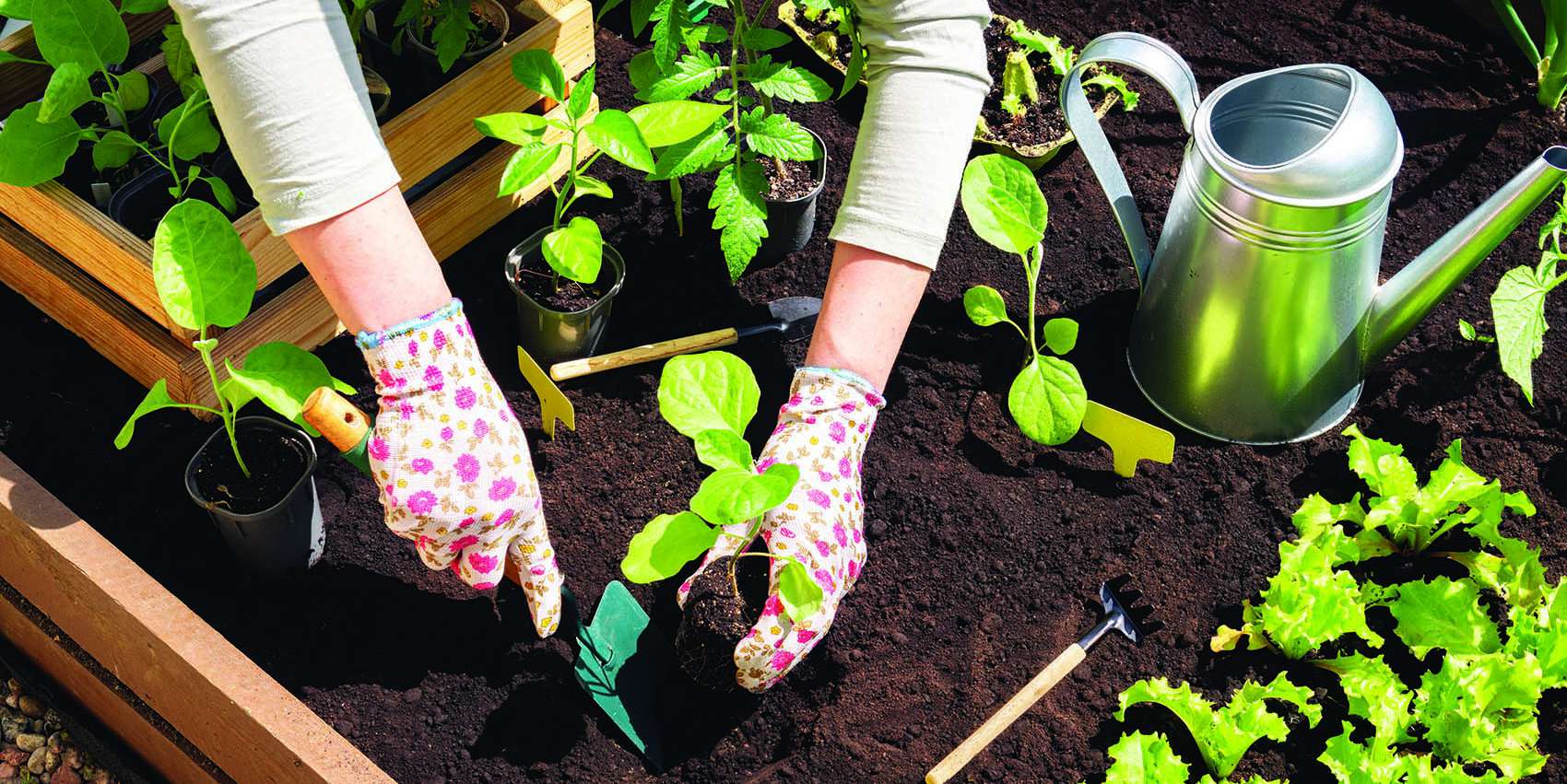
It’s time to get your hands dirty! When you’re planting seedlings, take time to nestle each plant into its new home with care and attention. Read the transplanting tips that come with your plants to identify how deep the roots need to be buried, the best time to do it, and the right techniques. Water slowly and gently after transplanting and make sure no roots are exposed. Keep roots moist until established.
Add mulch
Once your plants are snug in the soil, top things off with a generous layer of mulch to help retain moisture, suppress weeds, and regulate soil temperature. Here are a few different types of mulch to consider:
• Straw: Look for hollow stalks left over from wheat, barley or rye harvests. Hay may contain dried weeds and their seeds which could pose a problem.
• Wood bark: Bark mulch is more durable than wood chips and can last up to 10 years. There are also recycled rubber options for this.
• Pine needles: Pine straw is a light mulch that helps insulate the soil and stabilizes the soil temperature.
• Leaves: If you have trees in your yard, shredding fallen leaves (with a leaf shredder) can produce an inexpensive and nutrient-rich mulch.
• Compost: You can easily purchase compost at a nursery or make your own at home using food scraps and trimmings from your garden. Compost returns nutrients to the soil and works well for flower and vegetable garden beds.
Observe and maintain
Now that you’ve got everything into the ground the way you want it, it’s time to roll up your sleeves and tend to your garden with love and care. Keep an eye out for pests and signs of diseases like leaf discolouration, holes or wilt. Water regularly, and stay on top of any necessary pruning or fertilizing to keep your garden looking its best. Regularly check for wilting plants, sudden death or discolouration of leaves, spots, powdery residue, and uncharacteristically small leaves. These could be signs of plant disease, pests or improper care.
Planting successfully
While the steps listed above help get you started, success comes from consistency. You’ll need to care for your garden regularly, observe how your plants change and grow, and use your app to keep track of any problems. Like most hobbies, gardening involves some trial and error. You may learn that some plants don’t grow well in your yard or soil and that you should watch for certain pests.
Have fun with your gardening and have a happy Mother’s Day!
— Houselogic.com