


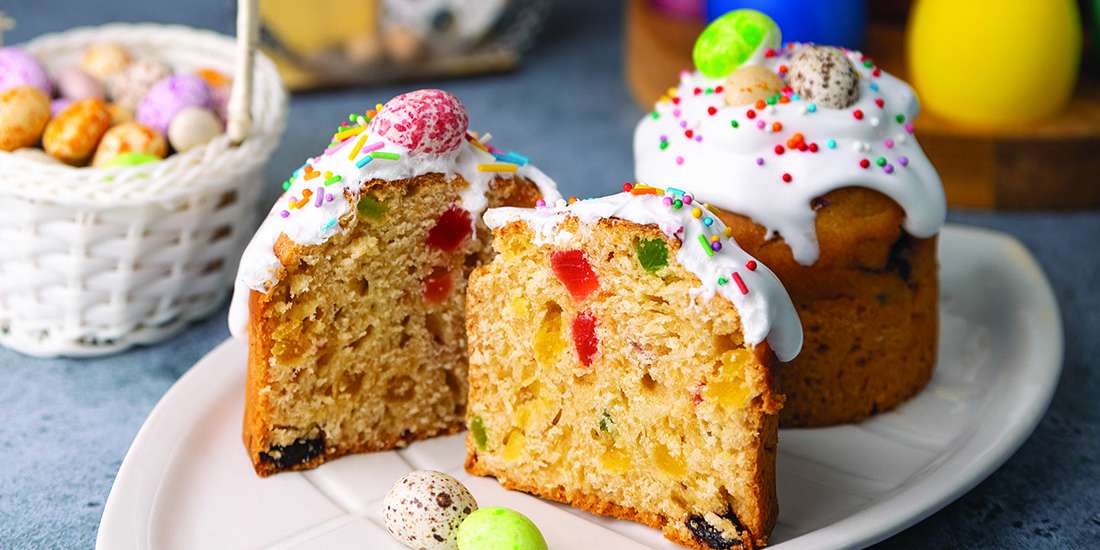
Paska is a traditional Ukrainian, yeast-leavened sweet bread that’s enjoyed in the weeks leading up to Easter. With roots tracing back to pagan sun-worship rituals celebrating spring’s arrival, it symbolizes new life.
While strongly associated with Ukraine, similar bread traditions exist throughout Eastern Europe, such as Romanian pasca and Russian kulich, and is a heavier version of the Italian panettone. Even though my family were German Mennonites, because they lived in Ukraine, I grew up with this tradition and always looked forward to it as a kid with as much excitement as I did chocolate rabbits and dyed eggs.
Making paska isn’t difficult, and it’s a task that everyone can join in on. What makes this one fun and unique is that traditionally the bread is baked in tin cans of various sizes. My Oma would usually use the large 796-ml tomato juice cans left over from making Russian-style borscht. You can use smaller sized cans if you prefer, or fluted baking tins like the kind usually used for caneles, fluted or plain loaf pans, or even bundt pans.
If you like to eat your paska fresh and hot in the morning, making the dough the night before and letting it rise a second time in the fridge overnight is the way to go.
Adding raisins or even dried fruit is optional. I prefer it without those additions, but feel free to embellish according to your tastes. You may even want to add chocolate chips! Sliced almonds and one teaspoon of almond extract also impart a tasty alternative.
If you’re giving one as a gift, wrap in pretty paper and tie with a bright string and a fresh flower.
Ukrainian Easter Paska
This version of paska has a fantastic texture or “tooth” thanks to the potato starter, and isn’t overly sweet. This recipe is easily doubled, and the final product freezes well, but if you plan to freeze it, don’t glaze it until after it’s been thawed.
Ingredients
Potato Starter:
3 medium potatoes peeled, chopped
3 Tablespoons all purpose flour
Dough:
1 cup 2% milk warmed
2 teaspoons active dry yeast
4 large egg yolks
2/3 cup white sugar
1 orange zested, juice reserved
1 teaspoon fine sea salt
5½ -6 cups all-purpose flour
1/4 cup unsalted butter softened
Glaze:
2 Tablespoons fresh orange juice
1 cup powdered sugar
1/2 teaspoon pure vanilla extract
Sprinkles in pastel colours, jelly beans, etc.
Instructions for starter:
Make this starter the night before you plan to bake.
1. Place the potatoes in a medium pot and cover with an inch of cold water. Bring to a boil and cook until soft. Reserve 3/4 cup of the cooking water.
2. Drain the potatoes and mash until smooth with no lumps. Add the potato water and flour and mix into a paste. Transfer to a bowl and cool. Cover, and leave this starter in a warm place for 12 hours.
Instructions for dough:
1. In a small bowl, whisk together the warm milk and yeast. Set in a warm place to proof, approximately 7 minutes.
2. In the bowl of a stand mixer fitted with the paddle attachment, beat the egg yolks and sugar until pale yellow. Zest in the orange.
3. Scrape in 1½ cups the potato starter and mix well. Tip in the proofed yeast, add the salt and mix gently.
4. Switch to the dough attachment and add 5½ cups of the flour, 1 cup at a time. Mix until you have a shaggy dough. Drop in the butter and mix well.
5. Remove the dough hook, cover the bowl with a cloth and set in a warm place to rise for 1 hour.
6. After rising, return the bowl to the mixer and add the dough hook. Knead the dough on low for 10 minutes until smooth and elastic. Gradually add in the remaining flour. Set the dough to rise for an hour for a second time in a warm place.
7. While dough is rising, generously oil the clean tins. Once dough has risen, divide it into enough pieces for the amount of tins you have. If you’re using 796-ml tomato cans, you’ll have enough for three. Roll them into balls and tuck into the tins. Tins should be filled halfway with dough. If you have extra dough, fill a smaller tin or mini loaf pan. Cover the tins with a towel and set to rise in a warm place for one hour.
8. Preheat the oven to 350°F and set the oven rack on the bottom shelf. Place the tins on a baking tray and pop in the oven. Bake for 40-50 minutes until dark golden on top.
9. Cool the bread for 5 minutes in the tins (don’t leave them in longer or they get soggy). After 5 minutes, run a knife around the edges and pop them out to cool on a wire rack.
Instructions for glazing:
1. In a small bowl, whisk together the orange juice, powdered sugar and vanilla until smooth. It shouldn’t be soupy but should drip easily from the whisk.
2. Brush or spoon over the tops of the cooled paska, letting the glaze trickle down the sides. Garnish with sprinkles. You can also decorate with extras like jelly beans, candied orange rinds, pastel-coloured macaroons or bit-sized meringues and even edible flowers for a pretty finishing touch.
Note for overnight rising: Refrigerate the dough after you knead it in Step 6. The second rising will take place entirely in the fridge, slowing down the rising but adding exceptional flavour! The next morning, shape the dough and allow it to rise at least 90 minutes to room temperature before baking. Enjoy!
Mennonite Glums Paska Spread
Glums is a traditional Mennonite cottage cheese and egg spread to put on paska, making it a meal. It sounds strange, I admit, but once you try it, you won’t be able to eat paska without it! There’s something deliciously addictive about the taste and texture.
Ingredients:
500 ml container dry cottage cheese (must be the “dry” kind, not “wet”)
1/4 cup room temperature butter
1½ cups white sugar
Pinch of salt
1/2 teaspoon vanilla
1/2 cup heavy whipping cream
3 small or 2 large hard boiled eggs, chopped.
1 Tablespoon unflavored gelatin softened in 1/4 cup warm water
Zest of one lemon (optional)
Instructions:
1. In a small saucepan heat the whipping cream and gelatin/water together. Simmer for a few minutes until slightly thickened, but be sure not to boil it.
2. Remove from heat and allow to cool to room temperature before using.
3. Place all ingredients into a blender or food processor and mix until the mixture is thoroughly combined but still has a bit of texture.
5. Store in a tightly sealed glass or plastic container in the fridge. Chill well. Once chilled, spread thickly on slices of paska and enjoy. So fresh!
Wishing you all a Happy Easter!