


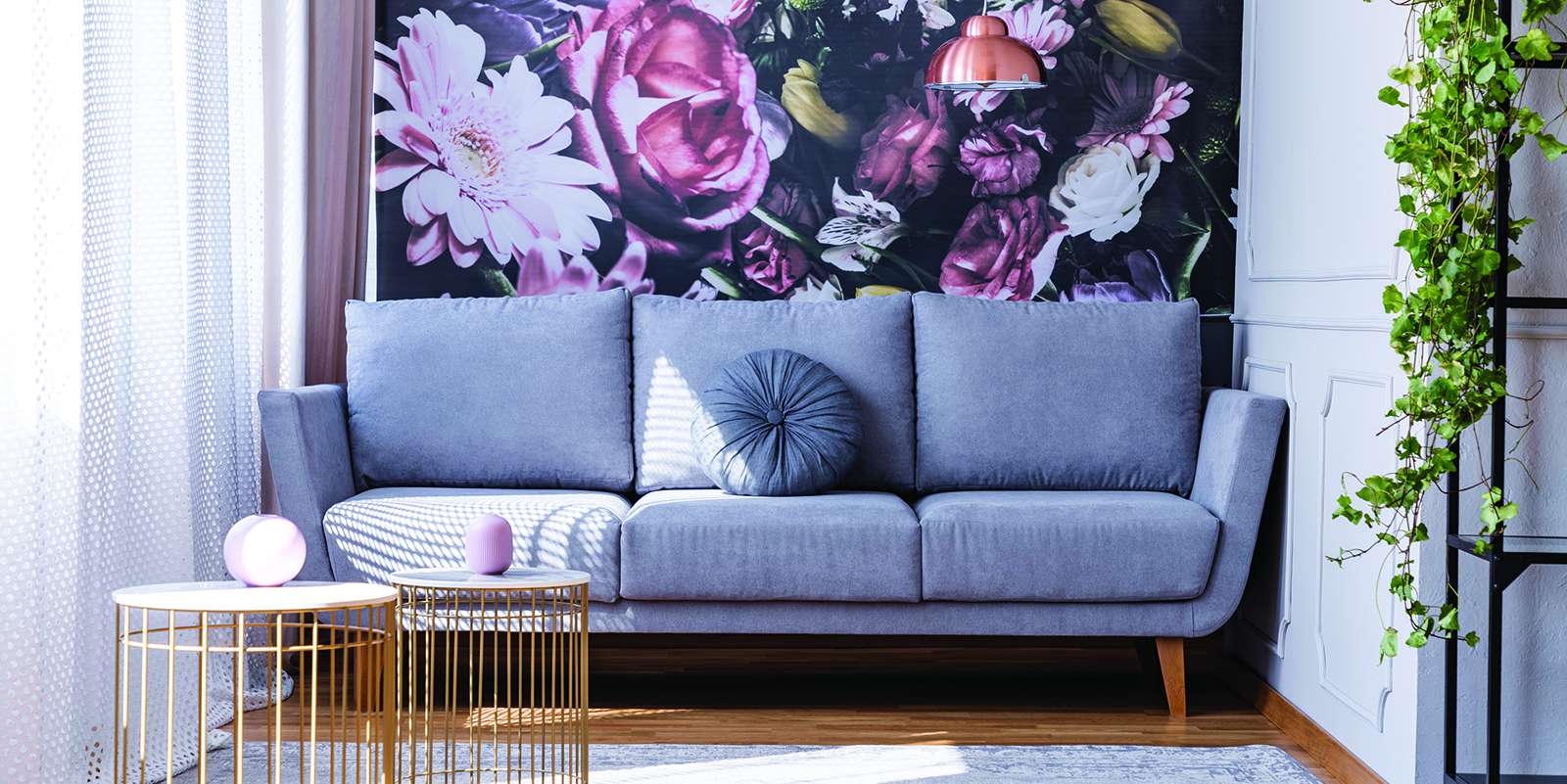
Have you ever wondered how you can transform an ordinary room into something extraordinary? With peel-and-stick wallpaper, you can easily and quickly decorate your home — especially if you hate to paint, you’re a renter, or like to redecorate often.
Install peel-and-stick wallpaper to add a pop of colour to bland walls or an interesting nook, a subtle texture to a ceiling, or a fun pattern to walls, stair risers and furniture. When compared to traditional wallpaper (which requires pasting), it’s much easier to install and remove. No commitment, no wall damage!
Peel-and-stick wallpaper is typically sold by square foot, so your costs will depend on how large of a space you’re looking to cover. You can find it at local home improvement or craft stores for about $70 for 30 square feet, or online shops like Etsy for around $80 for 16 square feet — depending on the shop and material. Regular wallpaper typically costs around $45 for 56 square feet, but this doesn’t account for the other supplies you’ll need, or the time you’ll spend applying it. Costs will vary depending on product.
Using removable wallpaper makes wallpapering a fun DIY weekend project. Self-adhesive wallpaper peels away from its backing, adheres to the wall, and can be removed and repositioned easily — at least once before it possibly loses some of its stickiness. Consider temporary wallpaper if you’re looking for an easy and mess-free way to try a new style.
Determine how much wallpaper you need
Find the square footage of the wall or space you want to cover and divide it by the square foot of one roll. If your wallpaper is patterned, you’ll need to add 20% to ensure the pattern matches on neighbouring strips. Then add an extra roll or two just in case of errors such as short cuts or tears. Also, it’s advised to order a sample of the wallpaper to make sure it’s exactly what you’re looking for before you place your full order.
Gather your tools
You don’t any expensive tools or supplies to apply removable wallpaper. You’ll likely have most of these already handy in your tool box. You’ll need:
• a tape measure;
• a pencil or chalk line;
• a level or laser level;
• a ruler or straight edge;
• a utility knife;
• a smoothing tool; and,
• a step stool or ladder.
Prepare the surface
It’s important for the surface to be clean and dry before installing peel-and-stick wallpaper. Give your walls and baseboards a wipe-down with a microfibre cloth to remove dust. If the area is greasy (like a kitchen backsplash) clean the surface with hot, soapy water and let dry. Remove outlet covers and move all furniture out of the way. If your walls are freshly painted, wait the recommended cure time before installing your wallpaper.
Make your guideline
Measuring left to right from the corner, use a tape measure to measure the width of your first panel and mark with a pencil. Using a level, draw a straight line from top to bottom.
Cut strips of wallpaper
Measure the height of the area and cut strips to fit, adding eight to 20 centimetres to the bottom or sides — wherever the wallpaper will be lining up with the next piece. This accounts for any pattern matching. Large patterns might require more overhang.
Peel and install
Peel back about 20 centimetres of the backing on one strip. Line it up with the ceiling and the guide mark you made on the right. Stick the wallpaper to the wall and then slowly peel and stick the paper down the wall.
Smooth as you go
Use a smoothing tool to push out any air bubbles and to ensure the entire strip is securely attached. Once you reach the bottom, cut the overhang using a straight edge and a very sharp utility knife. Repeat until the wall is covered, paying special attention to matching your pattern at the seams.
Enjoy the new view
Stand back and admire all your hard work!
Keep in mind, you don’t need to cover your entire room with peel-and-stick wallpaper design. Accent walls can be a striking way to add character to your room. Pick the wall that will work best — preferably the one that gets the most natural light— and, ta-da, a new look in your room with only a quarter of the work to do.
Bonus Tips: Peel-and-stick wallpaper makes an interesting backing inside bookcases. There are even versions of it for the spaces between stair treads! Another great option is using peel-and-stick decals in specific areas, rather than covering the entire wall. And don’t forget about peel-and-stick tile for kitchen backsplashes. The possibilities are endless!
Helpful peel-and-stick wallpaper tips
As with any DIY project, there are many tips to help the task go as smoothly as possible. Here are a few.
• Recruit a helping hand: While peel-and-stick wallpaper can be a solo project, having a helping hand certainly will make things easier and faster. Not to mention more enjoyable!
• Ceilings are not a guide: While you might be tempted to line your wallpaper up with the ceiling, don’t! Most ceiling lines are not straight — even in new homes — causing the wallpaper to appear crooked. Instead, use a levelled vertical line as your guide. The same can be said for corners in rooms. Make sure you’re measuring precisely to avoid any hiccups.
• Don’t pull too hard: As you remove the backing of the wallpaper, it’s important not to pull too hard as it can stretch out the vinyl material.
• Set aside the scraps: You’ll likely end up with a good amount of scraps as you trim the excess from the bottom and top of each strip. Keep these in case you need to fill a tight space or odd gap. You can also use them on other DIY projects like trays, candle holders, or notebooks! Tiny pieces can be used for bookmarks.
Surfaces not recommended for peel-and-stick wallpaper
There are many surfaces on which peel-and-stick wallpaper should not be used, as the adhesive may not adhere properly, or the wallpaper may not lay flat.
• Textured walls: Without a flat surface to cling to, the wallpaper won’t be secure, creating an uneven texture with wrinkles and bubbles.
• Brick and cinder block: Similar to textured walls, the lack of flat surface poses an issue.
• Outdoors: Unless the product you choose is specifically made for the outdoors, the wallpaper isn’t waterproof or weatherproof.
• Non-stick paint: For obvious reasons, peel-and-stick wallpaper won’t work on non-stick paint.
• Old wallpaper: In addition to structural issues, the pattern of the old wallpaper may bleed through the new stuff, which isn’t a visually pleasing aesthetic.
Peel-and-stick wallpaper is a beginner-friendly DIY project that can completely transform a room. The best thing about it is you just need to peel and stick it to the wall, no glue required. It’s also easy to remove, which is handy if you’re in a rental property.
— Realtor.ca