

Is there anything more cozy than sitting in your home, maybe by a fireplace, sipping a hot cup of coffee or tea as the snow falls outside your window?
That is, until the snow keeps piling up for hours. Then the winds start to whip. Oh, and what’s that? Thundersnow?! It’s all postcard worthy until you have an ice dam problem, or a tree limb crashes onto your roof. With all the recent snowfall we’ve been experiencing, this is an important topic to explore.
We spoke to Brian Watters, construction manager with Akash Homes based in Edmonton, Alberta, to get a better understanding of how snow can damage your home.
What is the most common problem snow creates for homeowners?
As picturesque as a house enveloped in snow might look, there’s always more than the eye can see when it comes to what that snow is actually doing to your home.
“Ice damming is a common problem in heavy snow areas,” shares Watters. “This is caused by snow melting on the upper roof and then refreezing when it encounters the colder area above the eaves.”
Ice damming can cause damage to various areas of your home including the eavestrough and shingles. In some extreme cases, Watters has even seen water ingress into homes.
“This is caused by the buildup of snow around the house blocking off (key intake or exhaust) vents,” he adds.
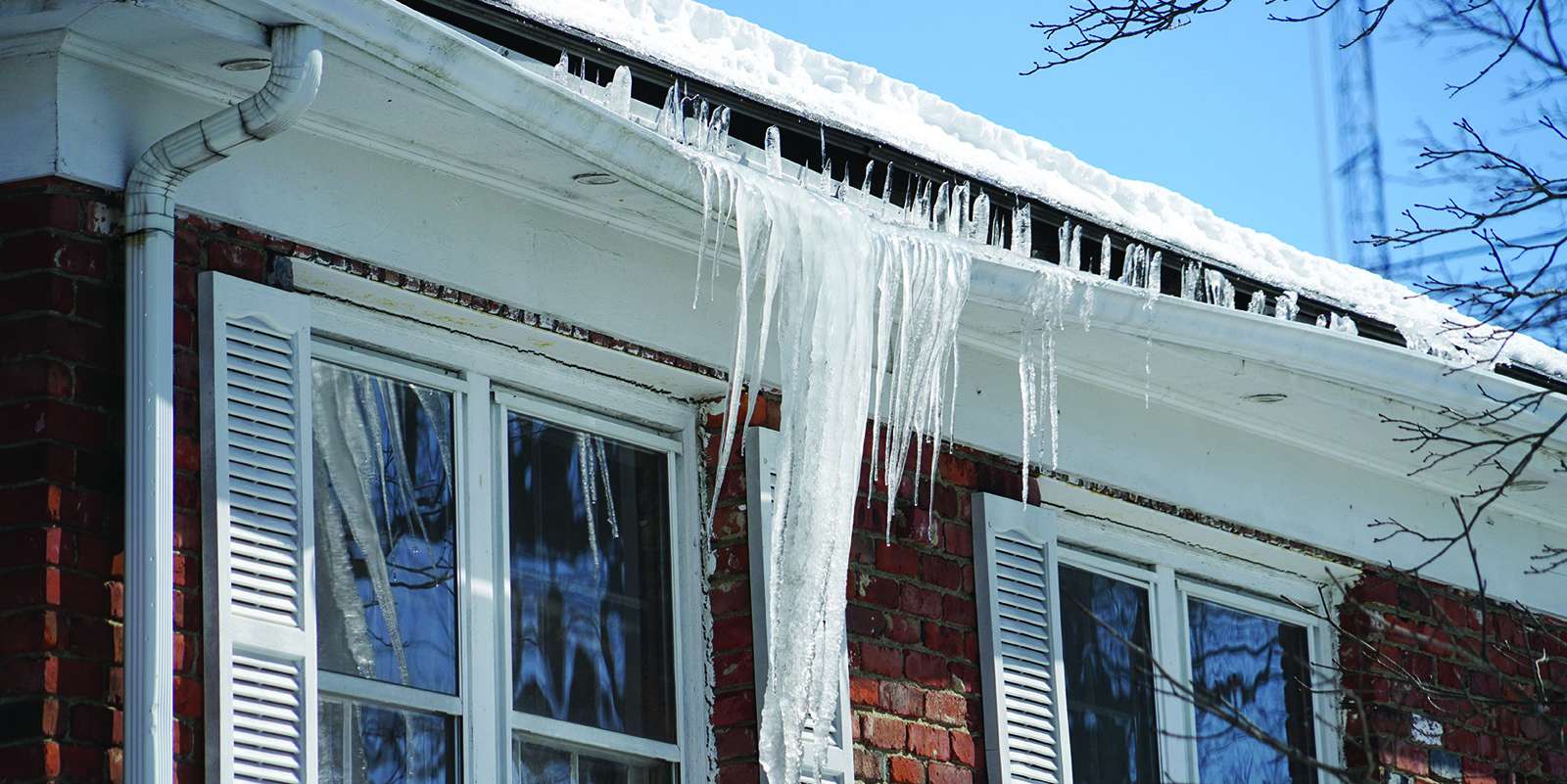
When it comes to ice damming, look out for long icicles that build up off the edge of your home’s roof.
“While this can give the house a bit of a ‘fairytale’ look, it’s an indication of something going wrong,” Watters comments.
For blockages of vents, Watters recommends looking for any above-ground, low-lying vents that might be covered in snow. For roof vents, watch for sections that have low slopes as snow can pile more easily there.
Later on, once winter transitions to spring, keep an eye for water marks in the basement or on the ceiling — those could be potential signs of meltwater issues from the previous winter.
How can you prevent damage caused by snow?
Fortunately, there are many ways to prevent, mitigate, and minimize damages made during a winter not-so-wonderland snowfall.
The best solution to address ice damming, according to Watters, is to keep the rest of your home’s roof the same temperature as the eaves.
“This can be achieved by ensuring proper ventilation to the roof, both upper and lower vents,” he shares.
But like snowflakes, not every roof is exactly the same. Watters recommends contacting a qualified roofing professional to help you determine the right amount of ventilation for your home. If your home has an attic, he also advises to check insulation levels there as well.
“Many high-efficient appliances, such as furnaces and hot water tanks, have shut offs if they cannot get proper air flow,” adds Watters. “So, if your home or water supply is cold, the first place to check will be the intake vents to ensure they are clear.”
Additional recommendations include:
• In the event of heavy build-up around the roof vents you can use a roof rake to knock the snow down. Often, this step won’t be needed as naturally occurring wind and air flow usually help keep these areas clear.
• For meltwater ingress in the spring, make sure your drainage systems are working. Ideally, water flows away from your home — not towards it. One thing you can do to help this is checking that your downspouts are flipped down.
• Check that your weeping tile system (drainage) is functioning properly.
• Clear storm drains of debris — including any window well drains!
“Whether tied into a sump for overland or storm sewer drainage or tied directly into the municipalities storm water facilities you want to ensure it is working as intended,” adds Watters.
How do you deal with damage from snow once the storm is over?
Once the damage has been done, what’s next, other than to wait for the snow to melt with a cup of hot chocolate?
From Watters’ experience, in the case of ice damming, gutters and shingles are the most common casualties of damage caused by snow.
“Oftentimes it will take multiple seasons of no action before these items are damaged to a point of replacement,” says Watters.
If you are able to safely, you can clear the edges of your roof by using an extendable brush. For major snow clearing, you’ll want to call in the experts as going on your roof for any reason can be dangerous, especially in slippery conditions.
For any exhaust or intake blockages, you can simply restart the appliance based on the manufacturer’s instructions.
Do all home insurance plans cover snow damage?
We asked Christina Windall of Acera Insurance to share her insights.
“Not all home insurance covers snow damage as each insurance company has different wordings and perils they are insuring,” she says. “This is the exact reason why it’s important to review the policies with an insurance professional and ask questions to make sure people know what’s covered and what’s excluded.”
Similar to how every property is unique, every insurance policy should be tailored to the needs of the homeowner.
“If coverage for snow damage isn’t found in the primary policy, coverage for damage may be added by an endorsement such as overland water,” continues Windall. “This endorsement covers direct physical loss or damage caused by overland water, which is defined as water that accumulates or submerges land that is usually dry. Snow coverage is included, but specifically for damage caused by the rapid or sudden melting of snow or ice that results in water entering the property.”
Windall notes that some types of damage, such as snowslides and avalanches, damage from gradual seepage or leakage, or damage to certain outdoor structures and surfaces (including but not limited to fences, patios, and retaining walls) may be excluded in these policies.
Though the snow may be a seasonal delight to look at, it’s less delightful when it’s causing significant damage to your home. Make sure your insurance policy is up to date, and don’t be afraid to call in the professionals if you think your home might be susceptible to snow damage.
— REALTOR.ca