


By Jeremy Davis
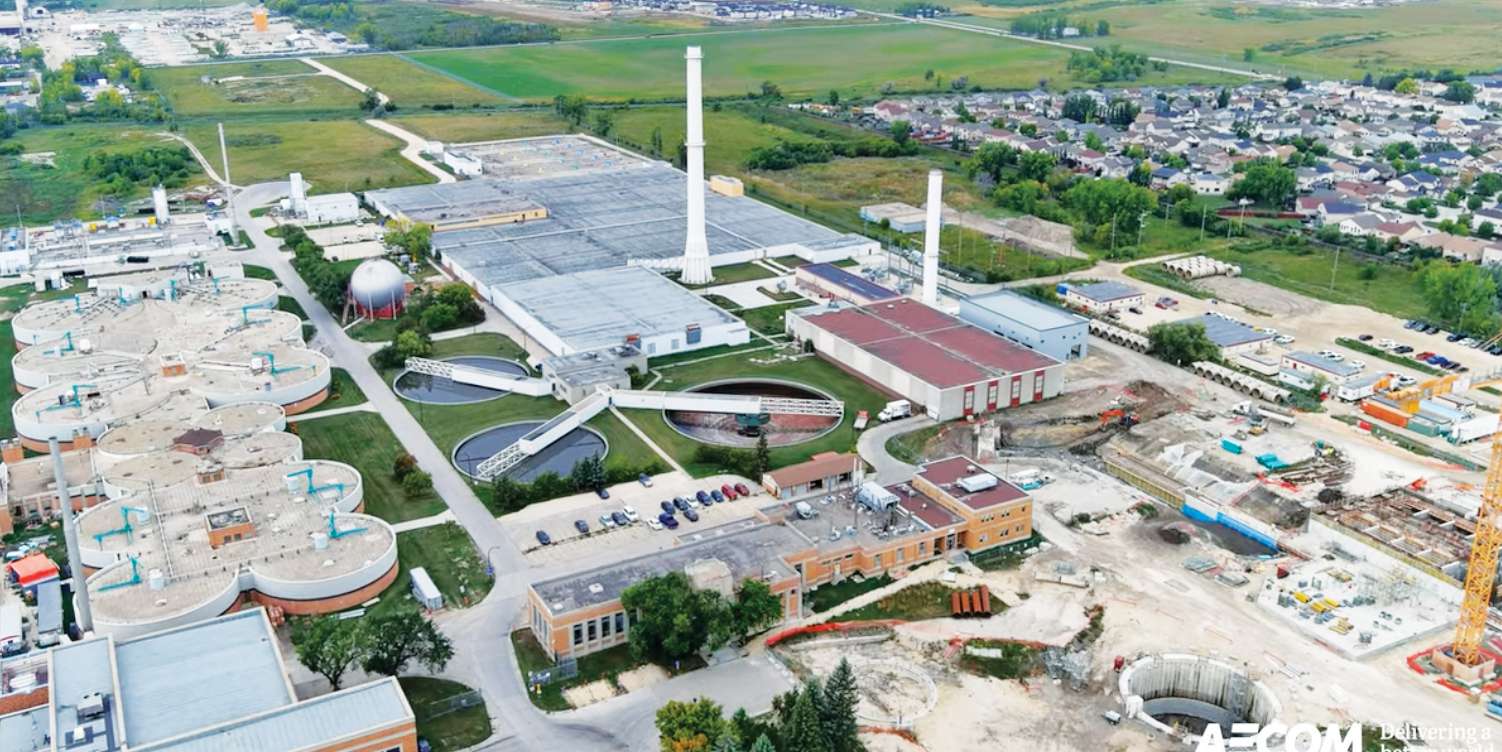
In previous editions of the Real Estate Market Matters column, we’ve discussed the importance of upgrading the City of Winnipeg’s North End Sewage Treatment Plant. Sewage treatment projects aren’t captivating topics for discussion but there is no question they are foundational for economic and population growth. Of the City’s three sewage treatment plants, the North End Water Pollution Control Centre (NEWPCC) represents the City’s largest and most complex plant which has been in operation since 1937 and treats approximately 70% of Winnipeg’s sewage. This facility has a finite capacity which, if reached, would require the city to say no to population and economic growth and that’s not a scenario any Winnipegger wants to see.
Over the course of the last two decades, the City of Winnipeg has been working on how to upgrade the NEWPCC which would enable adherence to Province of Manitoba Licenses issued to limit nitrogen and phosphorus. In 2019, a Class 3 estimate (which means the total project estimate is within a range that is between 20% less or 30% more), put the total cost for the NEWPCC upgrade at over $1.6 billion. After a global health crisis, a US President who has upended the international trading system through tariffs, and a few years of supply chain, labour and borrowing cost increases, the total cost now exceeds $3 billion.
The decision was made to split the project into three phases, and this enabled the City to divide its asks from federal and provincial governments into three separate requests that would be staggered in start dates. The first phase was named Power Supply & Headworks Facilities which was fully funded by the City of Winnipeg, Province of Manitoba and Government of Canada, and is scheduled for completion in 2026. The second phase was named Biosolids Upgrade which recently received achieved funding from the same three levels of government and is scheduled for completion in 2030. The third phase was named Nutrient Removal Facilities and currently only has one-third of the total project cost committed by the City and targeting its completion for 2032.
The third phase is where the City is currently attempting to gain funding commitments from the provincial and federal governments after the City put its one-third share of the project representing $547 million in its recent 2026 Proposed Budget Update. Earlier this year, the City’s public service was tasked with proposing a plan to fund the entire third phase and to avoid exceeding the City’s debt limit, the result which would have increased the annual water bill of the typical Winnipeg household by $1,000 by 2027.
At the time, Mayor Scott Gillingham and Councillor Ross Eadie, Chair of Water, Waste & Environment, opposed this plan and instead recommended:
• A slight increase in 2025 which amounted to about $19 a month for the typical household.
• Pursuing alternate financing options like the Canada Infrastructure Bank and more in-depth conversations with provincial and federal governments.
• Referring the $1.5 billion estimate to the City’s new Chief Construction Officer, Tom Sparrow, to review for potential savings.
At the end of October, the City announced that through a new, long-term financial plan and cost-sharing with other levels of government, the average household could expect increases limited to 2.8% in 2026 and 4.2% in 2027. This represents an annual increase for the typical household of $44 in 2026 and $68 in 2027. The impact of these changes ensure Winnipeg’s water and sewer rates continue to be around the middle point among major prairie cities while property taxes are among the lowest in Canada.
As a result, the focus remains on securing funding commitments from provincial and federal governments. A recent City report estimates that Winnipeg will reach capacity at NEWPCC in 2032 so there is a hard deadline of when this needs completion. The Fiscal and Economic Impact of NEWPCC Upgrades study completed by the City of Winnipeg found that in addition to securing wastewater treatment capacity in Winnipeg for decades, a completed NEWPCC would result in $186 billion in economic growth while generating $47 billion in tax revenue between 2033 and 2050 for provincial and federal governments. Not completing the third phase by 2032 puts all of this revenue at risk and it underscores just how crucial it is to see this to completion.
Residents who want to voice their support for funding commitments from other levels of government should contact their local provincial and federal elected representatives.
To view the Fiscal and Economic Impact of NEWPCC Upgrades study, please scan the QR code below.
Jeremy Davis is the Winnipeg Regional Real Estate Board’s Director of External Relations & Market Intelligence.