


As fall fades and the colder winter weather sets in, many Canadian homeowners begin the annual ritual of preparing their homes for Mr. Jack Frost’s arrival.
While sealing drafts and having your furnace inspected are standard practices for homeowners, one often overlooked aspect is the strategic use of a home humidifier. Like home air purifiers, humidifiers also play an important role in your indoor air quality when you spend most of the time with your windows and doors closed against the cold.
This guide will help you understand why a humidifier is essential and how to choose the best one for your specific needs, transforming your living space into feeling cozy and balanced all winter long.
What problems does dry winter air create for Canadian homeowners?
Ever wake up feeling like your throat is raw? Canadian winters make for dry, indoor air as heating systems tend to reduce humidity, leading to a host of issues. Experiencing persistent dry skin, chapped lips, or a scratchy throat? Dry air is probably the culprit. It can exacerbate respiratory problems, worsen cold and flu symptoms, and increases your risk of infection.
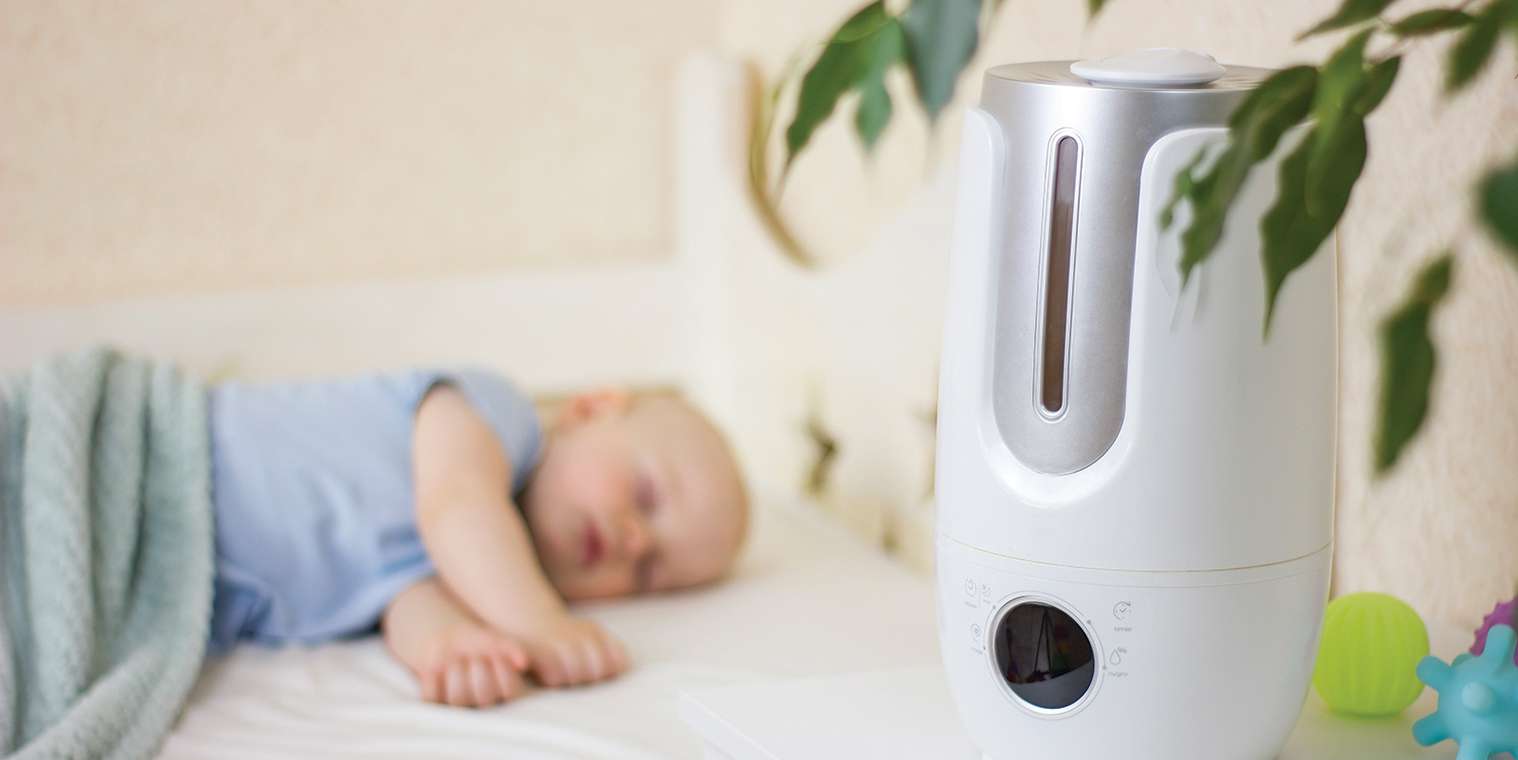
For parents, a humidifier for your baby is often pediatrician-recommended to help ease congestion and improve their sleep.
Your home suffers, too, with wooden floors and furniture cracking or warping from moisture loss. Even pets experience dry skin and respiratory irritation. Proper humidity is essential to protect your health, home, and everything within it.
What barriers do homeowners face regarding humidifiers, and how are they addressed?
You know by now there are benefits to having a humidifier in your home, so why do so many Canadian homeowners often hesitate to get one?
Is it difficult to maintain? Will it create mould? Is it expensive to run? These are valid questions that can deter potential buyers.
Modern smart humidifiers directly tackle these concerns with advanced features and thoughtful design.
For maintenance, many units now come with top-fill designs, making refills simpler. Some have components that are dishwasher safe and others even have self-cleaning modes, addressing the “how to clean a humidifier” question head-on. Integrated humidistats in smart models automatically maintain your desired humidity level, preventing over-humidification and reducing the risk of mould.
Health Canada’s publication, Relative Humidity Indoors, states that humidity levels above 50% encourage mould, bacteria, and dust mite growth, while extremely low moisture can cause dry skin, respiratory discomfort, and increases the risk of virus survival and transmission.
Regarding cost and efficiency, many good models are equipped with energy-saving modes and precise humidity controls, meaning they only run when its needed. The therapeutic benefits for dry skin, respiratory health, and even reduced static electricity contribute to a more comfortable and healthier home environment, potentially reducing healthcare costs.
For your home, proper humidity helps protect your valuable wood furnishings and floors from damage, preserving their longevity and appearance.
The versatility of modern humidifiers also means there is a solution for every specific need. Need a one in your bedroom to improve your sleep score? There are quiet, compact models.
Searching for one to use in a nursery? Look for cool mist and safety features.
Got a collection of tropical plants? A dedicated plant humidifier can create the ideal microclimate.
Whether you need a personal humidifier for your desk or a whole-home solution, the market offers many effective and user-friendly options.
Why should you use a humidifier this winter?
For Canadians facing months of frigid temperatures and notoriously dry indoor air, a good humidifier is not just a comfort tool, it can be a household essential. Using one during the dry winter restores moisture to dry indoor air, easing breathing and preventing dry skin, chapped lips, and throat irritation.
Consistent humidity also protects wooden furniture and floors from cracking. Humidified air feels warmer, allowing you to lower your thermostat and save on heating costs. Additionally, it reduces static electricity and creates a healthier environment for your family, pets, and indoor plants throughout the season.
What should you consider before buying one?
When searching for the best model, consumers typically evaluate several key features.
• Type of humidifier You can go with a cool mist (ultrasonic or evaporative), or warm mist. Cool mist is generally preferred for children and pets due to no hot water, while warm mist can feel more comforting and often kills bacteria in the water.
• Capacity and run time This is measured by tank size and output, indicating how long it can run before refilling.
• Coverage area Specified in square footage, this factor helps you choose if it is a humidifier for a smaller room, like your bedroom, or an open-concept living space.
• Noise level This metric is crucial for bedrooms and nurseries. Look for “whisper quiet” or low decibel ratings so they don’t disrupt anyone’s sleep.
• Features Check the unit to see if it has a humidistat (to maintain desired humidity), auto shut-off, night light, essential oil tray, remote control, and smart connectivity.
• Ease of cleaning Top-fill design, wide openings, or dishwasher-safe parts simplify things.
• Filter vs. filterless Filtered units may require replacement filters, which is an ongoing cost. Filterless ultrasonic models are common, but may require more frequent cleaning to prevent mineral dust.
• Safety features Especially important in a model for babies or toddlers, look for cool mist and stable designs that incorporate child-safe features.
Any special considerations for humidifier use?
Given Canada’s extreme winter climates in parts of the country, there are a few considerations you should keep in mind.
The primary one is maintaining the optimal humidity range. While a higher humidity might feel more comfortable, exceeding 55% during sub-zero temperatures can lead to condensation on your windows and walls, potentially causing mould or ice buildup. A smart humidifier with a built-in humidistat is invaluable for precisely maintaining indoor humidity levels.
Secondly, tap water in many Canadian regions is hard, containing high mineral content. Using hard water in ultrasonic humidifiers can lead to a fine white dust settling on surfaces, which is harmless, but
annoying. Distilled water is a solution, though an added cost. Alternatively, some good humidifiers offer demineralization cartridges or can be used with specific hard water filters. Make sure you are regularly cleaning your humidifier!
Finally, consider where you place your humidifier. Avoid placing it directly against walls, curtains, or electronics. Allow ample space for the mist to disperse evenly, ensuring effective humidification throughout the room, whether it is a humidifier for bedroom or a living area.
Embrace a humidified winter
Preparing your home for winter goes beyond turning up the heat; it means creating a comfortable, but above all, healthy indoor environment.
By investing in a home humidifier, you are not just buying a gadget, you are investing in your family’s health, your comfort, and the longevity of your home. From alleviating dry skin and respiratory irritation to protecting your wooden furnishings and nurturing your indoor plants, the humidifier benefits are extensive.
— REALTOR.ca